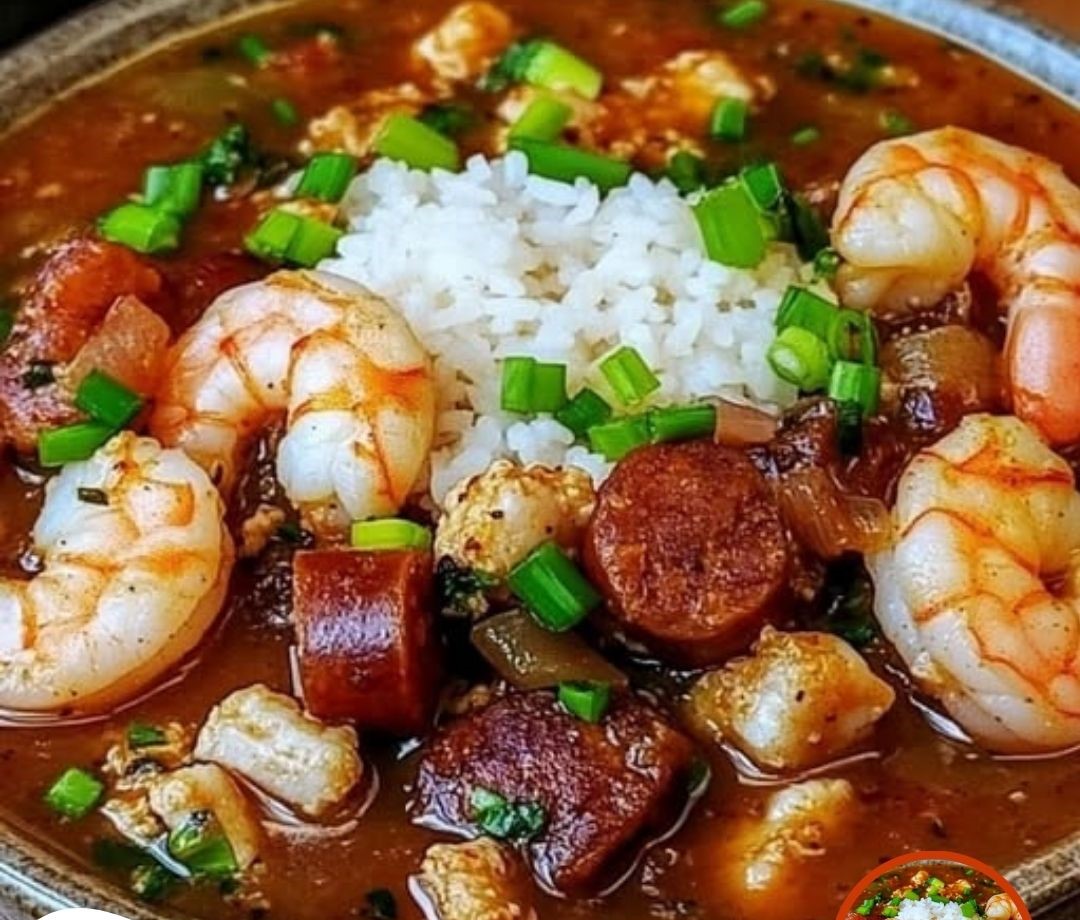
There’s something unforgettable about a pot of homemade Louisiana-style seafood gumbo slowly simmering on the stove. The deep, smoky aroma of the roux, the bold Cajun spices, the tender shrimp and crab melting into every spoonful — it’s the kind of meal that turns an ordinary evening into something warm, loud, and alive.
This classic Southern comfort dish is layered with flavor, history, and soul. Whether you’re making gumbo for the first time or bringing back memories of Louisiana kitchens and family gatherings, this recipe delivers a deeply satisfying bowl every single time.
Why You’ll Fall in Love With This Seafood Gumbo
- Deep, rich flavor from a perfectly cooked dark roux
- Loaded with shrimp, crab meat, and smoky andouille sausage
- Comforting and hearty while still feeling elegant
- Perfect for family dinners, holidays, or cold evenings
- Even better the next day as the flavors continue to develop
Kitchen Tools You’ll Need
Before you begin, make sure you have these kitchen essentials ready:
- Large heavy-bottomed pot or Dutch oven
- Wooden spoon or whisk
- Sharp knife
- Cutting board
- Measuring cups and spoons
- Ladle
- Rice cooker or saucepan for rice
Ingredients for Louisiana-Style Seafood Gumbo
For the Roux
- 1 cup vegetable oil
- 1 cup all-purpose flour
For the Gumbo Base
- 1 large onion, chopped
- 1 green bell pepper, chopped
- 2 celery stalks, chopped
- 4 garlic cloves, minced
- 1 (14.5 oz) can diced tomatoes
- 4 cups seafood stock or chicken broth
For the Seafood and Meat
- 1 pound shrimp, peeled and deveined
- 1 pound crab meat
- 1 pound andouille sausage, sliced
For the Seasoning
- 2–3 bay leaves
- 1 tablespoon Cajun seasoning
- Salt and black pepper to taste
For Serving
- Cooked white rice
- Chopped green onions for garnish
How to Make Louisiana Seafood Gumbo Step by Step
Step 1: Prepare the Dark Roux
Heat the vegetable oil in a large heavy-bottomed pot over medium heat. Gradually whisk in the flour while stirring continuously.
Keep stirring patiently for 20 to 30 minutes until the roux transforms into a deep chocolate-brown color. This step is the heart of authentic gumbo. The darker the roux, the deeper and smokier the flavor becomes.
Do not walk away during this process — roux can burn quickly.
Step 2: Cook the Vegetables
Add the chopped onion, green bell pepper, celery, and minced garlic directly into the hot roux.
Cook for about 5 to 7 minutes while stirring frequently until the vegetables soften and become fragrant. This flavorful mixture is known in Cajun cooking as the “holy trinity.”
Step 3: Add Tomatoes and Broth
Stir in the diced tomatoes and cook for another 2 to 3 minutes.
Slowly pour in the seafood stock or chicken broth while stirring constantly to fully combine the roux into the liquid. Add the bay leaves and Cajun seasoning.
Bring the gumbo to a gentle simmer.
Step 4: Simmer the Gumbo
Allow the gumbo to simmer uncovered for 20 to 25 minutes. Stir occasionally to prevent sticking and to help the flavors blend beautifully.
At this stage, the broth becomes velvety, rich, and deeply savory.
Step 5: Add the Sausage and Seafood
Stir in the sliced andouille sausage and cook for 10 minutes.
Next, add the shrimp and crab meat. Simmer gently for 5 to 7 minutes until the shrimp turn pink and perfectly tender.
Avoid overcooking the seafood to keep it juicy and delicate.
Step 6: Serve and Enjoy
Remove the bay leaves before serving.
Ladle the hot gumbo over cooked white rice and garnish generously with chopped green onions.
The result is bold, comforting, and packed with authentic Louisiana flavor.
Tips for the Best Seafood Gumbo
Stir the Roux Constantly
A burnt roux can ruin the entire dish. Stir continuously and lower the heat if needed.
Use Quality Seafood Stock
Seafood stock adds incredible depth and gives the gumbo a more authentic coastal flavor.
Don’t Overcook the Shrimp
Shrimp cook very quickly. Add them near the end to keep them tender.
Let the Gumbo Rest
Like many Southern stews, gumbo tastes even better after resting for a few hours or overnight.
Balance the Heat
Cajun seasoning levels vary widely. Taste as you go and adjust carefully.
Delicious Variations and Additions
Add Okra
Traditional gumbo often includes sliced okra for extra texture and natural thickening.
Make It Spicier
Add cayenne pepper, hot sauce, or sliced jalapeños for extra heat.
Use Different Seafood
Try oysters, crawfish, scallops, or firm white fish for a unique twist.
Chicken and Sausage Gumbo
Replace the seafood with shredded chicken for another Louisiana classic.
Storage and Reheating Tips
Refrigerator
Store leftover gumbo in an airtight container in the refrigerator for up to 3 days.
Freezer
Freeze for up to 2 months. For best texture, freeze without the rice.
Reheating
Warm gently on the stovetop over medium-low heat, stirring occasionally. Add a splash of broth if the gumbo thickens too much.
Avoid boiling aggressively to keep the seafood tender.
Louisiana Seafood Gumbo Nutrition Information
Approximate values per serving:
- Calories: 425 kcal
- Protein: 29g
- Carbohydrates: 18g
- Fat: 26g
- Saturated Fat: 6g
- Fiber: 3g
- Sodium: 980mg
Nutritional values may vary depending on ingredients used.
Frequently Asked Questions
What is the secret to authentic gumbo?
The secret lies in the dark roux. A properly cooked roux creates the deep, nutty flavor that defines authentic Louisiana gumbo.
Can I make seafood gumbo ahead of time?
Yes. In fact, gumbo often tastes better the next day because the flavors continue to develop overnight.
Can I use frozen shrimp?
Absolutely. Just thaw and pat them dry before cooking.
Is gumbo supposed to be thick?
Gumbo should be slightly thickened but still have a rich, soup-like consistency.
What rice works best with gumbo?
Classic long-grain white rice is the traditional choice because it absorbs the flavorful broth beautifully.
Can I make gumbo without sausage?
Yes. You can keep it entirely seafood-based or substitute smoked turkey sausage if preferred.
Final Thoughts
Louisiana-style seafood gumbo is more than just a recipe — it’s a slow-building celebration of flavor, patience, and comfort. From the dark roux to the final spoonful poured over rice, every step creates something deeply soulful and satisfying.
One bowl feels cozy. Two bowls feel necessary.